
When working at height, choosing the right lifting equipment can make your project safer, faster, and more efficient. Two common types of aerial work platforms are scissor lifts and boom lifts. Both machines help workers reach elevated areas, but they are designed for different jobsite conditions and working methods.
A scissor lift moves mainly straight up and down. It provides a stable platform for workers, tools, and materials. A boom lift uses an extendable arm to reach higher or farther areas, especially places that are difficult to access directly from below. If you are not sure which one is better for your project, this guide will help you understand the key differences between scissor lifts and boom lifts.
What Is a Scissor Lift?
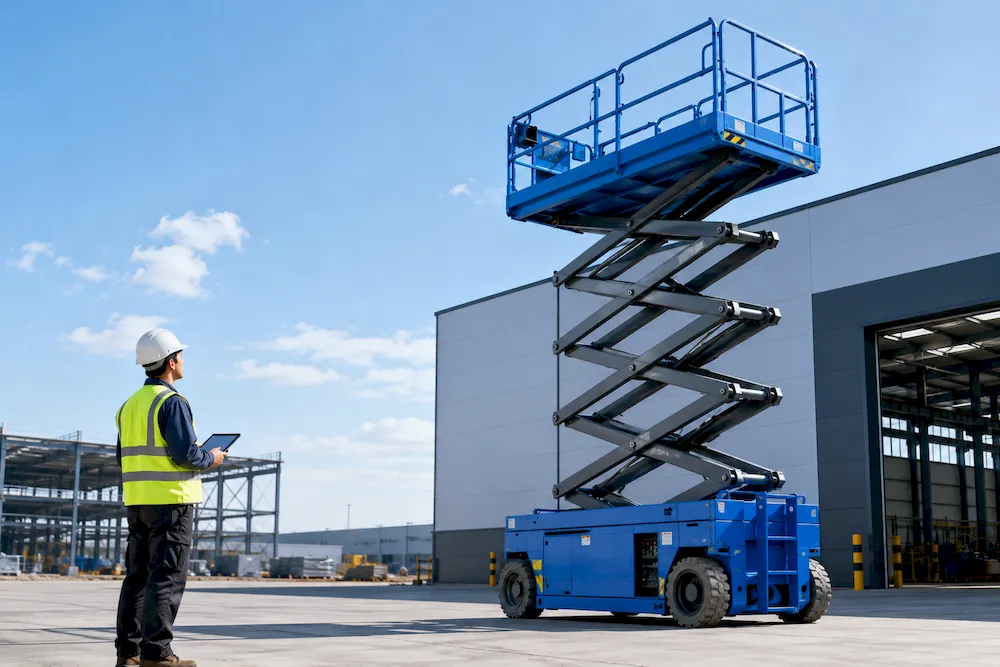
A scissor lift is a vertical lifting platform. It uses a crisscross metal structure, also called a scissor mechanism, to raise and lower the platform. The platform usually has guardrails, a safety gate, and enough space for workers and tools.
Scissor lifts are widely used in warehouses, factories, construction sites, shopping centers, workshops, and maintenance projects. They are suitable for jobs where workers need to move directly upward and work in one area for a period of time.
Common Applications of Scissor Lifts
- Ceiling installation and maintenance
- Warehouse rack work
- Electrical and lighting installation
- Indoor decoration and painting
- Factory equipment repair
- Building cleaning and maintenance
What Is a Boom Lift?
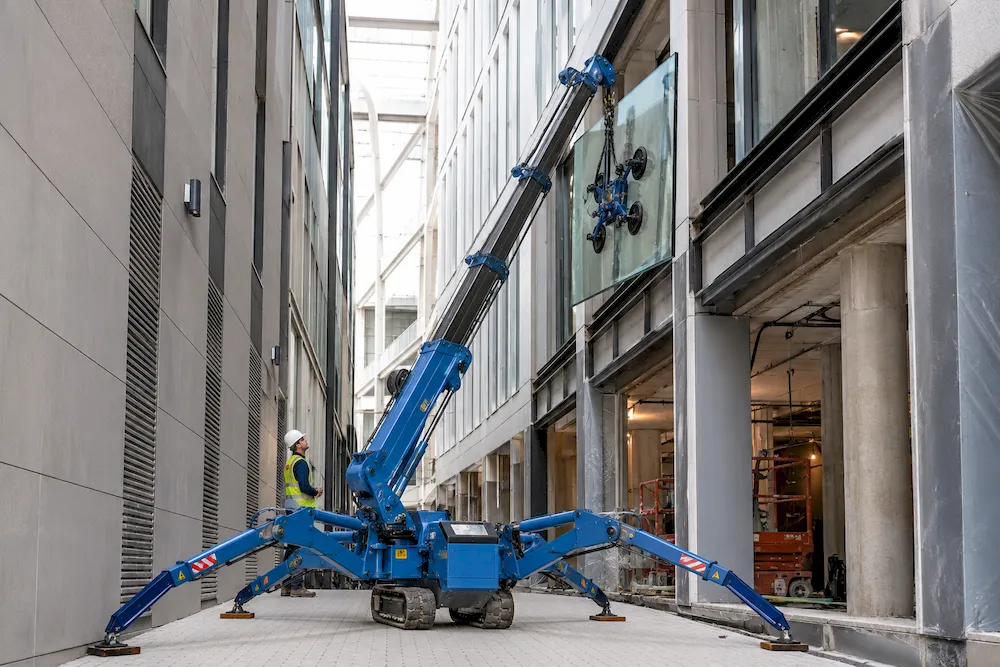
A boom lift is an aerial work platform with an extendable arm. The arm can move upward, outward, or across obstacles. Depending on the design, boom lifts can be straight, telescopic, articulated, or spider-type. The worker stands in a basket or platform at the end of the boom.
Boom lifts are often used when the work area is not directly above the machine. They are useful for reaching over equipment, buildings, walls, trees, pipes, or other obstacles. Compared with scissor lifts, boom lifts provide better horizontal reach and more flexible positioning.
Common Applications of Boom Lifts
- Outdoor construction and maintenance
- Building facade work
- Tree trimming and landscaping
- Roof and steel structure work
- Bridge and infrastructure maintenance
- Accessing areas over obstacles
Main Difference: Vertical Lift vs Flexible Reach
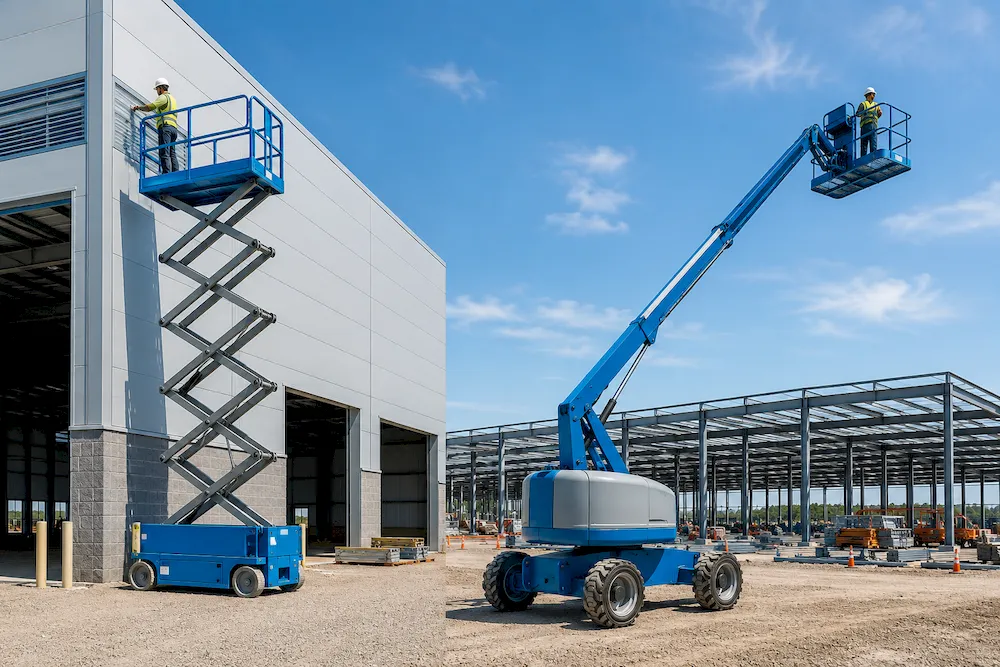
The biggest difference between a scissor lift and a boom lift is the lifting direction. A scissor lift is mainly designed for vertical lifting. It moves the platform straight up and down. This makes it very stable and practical for tasks that are directly above the machine.
A boom lift is designed for both height and reach. It can lift workers upward and also extend outward. This makes it more flexible when the work area is hard to access from the ground.
Choose a Scissor Lift When You Need Vertical Access
If your workers need to work directly above the machine, a scissor lift is usually a good choice. For example, if you are installing ceiling lights, repairing warehouse racks, or working on a flat indoor floor, a scissor lift can provide a stable and spacious platform.
Choose a Boom Lift When You Need Horizontal Reach
If your workers need to reach over obstacles or work on areas that are not directly above the machine, a boom lift is usually more suitable. For example, if there is a wall, machine, ditch, or structure between the lift and the work point, a boom lift can help workers reach the area more easily.
Platform Size and Load Capacity
Scissor lifts usually have larger platforms than boom lifts. This means they can carry more workers, tools, and materials. For installation jobs that require many tools or parts, the larger platform of a scissor lift can improve working efficiency.
Boom lifts usually have smaller baskets. They are mainly designed to carry one or two workers and limited tools. They are not the best choice for carrying many materials. However, their flexible arm makes them very useful for special access requirements.
When Platform Space Is Important
A scissor lift may be better if your project requires:
- Two or more workers on the platform
- More tools and materials
- A stable work area for installation
- Longer working time in one position
When Access Flexibility Is More Important
A boom lift may be better if your project requires:
- Reaching over obstacles
- Working at different angles
- Accessing narrow or difficult positions
- Moving the basket close to a specific work point
Indoor and Outdoor Use
Both scissor lifts and boom lifts can be used indoors or outdoors, but the correct model depends on the site conditions. Electric scissor lifts are common for indoor work because they are quiet, clean, and suitable for flat floors. Diesel or rough terrain scissor lifts are better for outdoor jobsites.
Boom lifts are often used outdoors because they can reach high and difficult areas. However, compact electric boom lifts and spider boom lifts can also be used indoors in some projects, especially when the machine needs to pass through narrow doors or work in limited spaces.
Indoor Worksites
For indoor work, consider the floor condition, door width, ceiling height, turning space, and ventilation. If the work area is flat and open, a compact electric scissor lift is often practical. If the machine needs to reach over obstacles or work in a narrow area, a small boom lift or spider boom lift may be more suitable.
Outdoor Worksites
For outdoor work, check the ground condition, slope, wind, and travel distance. Rough terrain scissor lifts can handle some uneven surfaces, but boom lifts usually provide better access for exterior walls, roofs, steel structures, and construction sites.
Mobility and Jobsite Space
Scissor lifts are usually easier to operate in open, flat spaces. They can move around warehouses, factories, and workshops efficiently. However, because they lift vertically, the machine must be positioned almost directly under the work area.
Boom lifts offer more flexibility because the machine does not need to be placed directly under the work point. This can be very helpful when the ground below the work area is blocked or unavailable.
Limited Ground Access
If your work area is above a machine, production line, landscaping area, or structure where the lift cannot be placed directly below, a boom lift may be a better choice.
Open and Flat Working Area
If the ground is open, flat, and close to the work point, a scissor lift is usually simple, stable, and cost-effective.
Safety Considerations
Safety is important for both types of equipment. Operators should receive proper training and follow the safety instructions of the machine. Before use, workers should check the platform, guardrails, tires, controls, emergency stop system, and ground condition.
Scissor lifts are generally very stable when used on flat ground and within the rated capacity. Boom lifts require careful attention to outreach, ground stability, and wind conditions because the arm extends away from the machine body.
Important Safety Points
- Do not exceed the rated load capacity
- Check the ground before operation
- Use the machine only within its working range
- Follow wind speed limits for outdoor work
- Inspect safety systems before each use
- Train operators before operation
Cost Comparison
In many cases, scissor lifts are more cost-effective than boom lifts, especially for simple vertical lifting tasks. They usually have a simpler structure, larger platform, and lower operating cost for indoor and warehouse projects.
Boom lifts are often more expensive because they provide greater reach and flexibility. However, if your project requires horizontal outreach or access over obstacles, the higher cost may be worthwhile because the machine can complete jobs that a scissor lift cannot do.
Choose Based on Value, Not Only Price
The lowest price is not always the best choice. You should compare the machine based on your real working height, reach requirement, platform capacity, site condition, and daily usage. A suitable machine can reduce downtime, improve safety, and help workers finish the job more efficiently.
Which One Is Better for Your Worksite?
There is no single answer for every project. A scissor lift is better for vertical access, larger platform space, flat ground, and indoor or warehouse work. A boom lift is better for flexible reach, outdoor jobs, difficult access points, and working over obstacles.
Choose a Scissor Lift If:
- You mainly need to move straight up and down
- The ground is flat and stable
- You need a larger platform
- You need to carry more tools or materials
- Your project is indoors or in an open work area
Choose a Boom Lift If:
- You need horizontal reach
- You need to work over obstacles
- The work point is not directly above the machine
- You need flexible positioning
- Your project involves exterior walls, roofs, or complex structures
Conclusion
Scissor lifts and boom lifts are both useful aerial work platforms, but they serve different purposes. A scissor lift is a practical choice for stable vertical lifting and larger platform space. A boom lift is a better choice when your workers need flexible reach and access to difficult areas.
Before choosing equipment, review your working height, horizontal reach, load capacity, ground condition, indoor or outdoor environment, and available space. If you are not sure which machine is suitable, share your project details with a professional supplier. The right equipment can help your team work safer, reach the right position faster, and complete your project more efficiently.