
In many construction, installation, and industrial lifting projects, space is one of the biggest challenges. Traditional cranes usually require a large working area, wide access roads, and enough space for turning and setup. However, many jobsites cannot provide these conditions. Some projects are located inside buildings, between structures, on rooftops, in narrow streets, or in areas with limited access. In these situations, a spider crane can be a practical and efficient lifting solution.
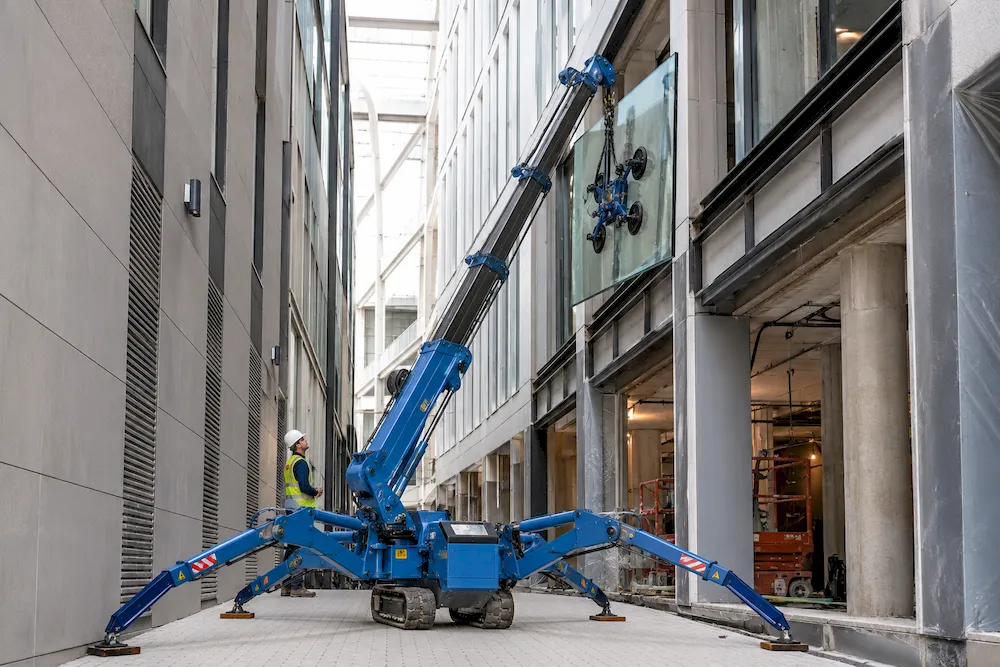
A spider crane is a compact lifting machine designed for tight spaces and difficult access areas. It usually has a small body, crawler tracks, telescopic boom, and multiple outriggers that extend like spider legs. This structure allows the machine to enter narrow areas, set up safely, and lift materials with good stability. For projects where a large crane cannot operate, a spider crane can help workers complete lifting tasks more safely and efficiently.
What Is a Spider Crane?
A spider crane is a mini crawler crane with extendable outriggers. It is called a spider crane because its outriggers spread out from the machine body like spider legs. These outriggers help create a stable lifting base even when the crane itself is compact.
Spider cranes are commonly used for glass installation, steel structure installation, curtain wall projects, indoor lifting, equipment maintenance, factory relocation, rooftop construction, and other lifting jobs in limited spaces. They are especially useful when a project needs both compact size and reliable lifting performance.
Why Narrow Workspaces Need Special Lifting Equipment
Narrow workspaces create many difficulties for lifting operations. Large cranes may not be able to enter the site. Forklifts may not reach the required height or lifting position. Manual lifting can be unsafe and inefficient. In some projects, the available working area is too small for standard lifting equipment.
Examples of narrow or restricted workspaces include:
- Indoor factory areas
- Shopping malls and commercial buildings
- Basements and underground spaces
- Narrow urban streets
- Rooftops and terraces
- Glass curtain wall installation sites
- Areas between buildings or machines
- Construction sites with limited ground access
In these environments, the lifting equipment must be compact, flexible, stable, and easy to position. This is where spider cranes show their value.
Benefit 1: Compact Size for Limited Access
One of the biggest advantages of a spider crane is its compact body. Many spider cranes are designed to pass through narrow entrances, factory doors, corridors, or site access points. Compared with larger mobile cranes, spider cranes require much less space for movement and setup.
Easy to Move Through Narrow Entrances
In indoor projects, the crane may need to pass through doors or move between machines, columns, or walls. A compact spider crane can often enter spaces that traditional cranes cannot reach. This makes it useful for interior lifting work, factory maintenance, and equipment installation.
Suitable for Crowded Jobsites
Many jobsites are crowded with materials, scaffolding, vehicles, or other equipment. A large crane may require too much space and may interfere with other work. A spider crane can work in a smaller area, helping the project continue without major site changes.
Benefit 2: Strong Lifting Ability in a Small Footprint
Although spider cranes are compact, they can still provide useful lifting capacity for many projects. Their telescopic boom and stable outrigger system allow them to lift materials such as glass panels, steel beams, machinery parts, stone panels, and construction components.
This combination of small size and lifting power is one of the main reasons why spider cranes are popular in confined workspaces.
Good Choice for Glass and Curtain Wall Installation
Glass installation often requires careful lifting in limited spaces. Large glass panels can be heavy, fragile, and difficult to move manually. A spider crane can lift glass panels accurately and help workers place them into position with better control.
Useful for Machinery Installation
In factories and workshops, machines often need to be moved, repaired, or installed in areas with limited space. A spider crane can help lift equipment parts where forklifts or larger cranes cannot operate easily.
Benefit 3: Flexible Outrigger Setup
Spider cranes are designed with outriggers that extend outward to improve stability. These outriggers can often be adjusted according to the site condition. This is very useful in narrow or irregular working areas.
Instead of requiring one large flat setup area, a spider crane can be positioned more flexibly. The outriggers help distribute the load and create a stable lifting base.
Better Stability During Lifting
Stability is very important for lifting work. When a crane lifts heavy materials, the machine must remain balanced. The spider-style outrigger structure helps improve stability and allows the crane to work safely within its rated capacity.
Adaptable to Different Site Layouts
Some worksites have walls, columns, slopes, or obstacles nearby. Adjustable outriggers make it easier to find a safe setup position. This flexibility helps spider cranes perform well in complex environments.
Benefit 4: Precise Lifting and Positioning
Many narrow-space projects require not only lifting power, but also lifting accuracy. For example, glass panels must be positioned carefully. Machinery parts may need to be placed into a specific location. Steel components may need to align with existing structures.
Spider cranes can provide controlled lifting and smooth boom movement, helping operators position materials more accurately.
Helpful for Fragile Materials
When lifting fragile materials such as glass, precision is very important. A sudden movement or poor positioning can cause damage. With proper operation, a spider crane can help improve control and reduce handling risks.
Improves Work Efficiency
Accurate lifting can also save time. Workers do not need to spend as much time adjusting the material by hand. This can improve productivity, especially in installation projects that require repeated lifting.
Benefit 5: Suitable for Indoor and Outdoor Projects
Spider cranes can be used in many types of environments. Some models are suitable for outdoor construction sites, while others can work indoors with proper ground conditions and ventilation. This flexibility makes them valuable for contractors, installers, and industrial service teams.
Indoor Applications
Indoor spider crane applications may include factory equipment installation, shopping mall maintenance, machine repair, steel structure installation, and glass replacement. Their compact body makes them useful in enclosed spaces where larger cranes cannot enter.
Outdoor Applications
Outdoor applications may include rooftop lifting, curtain wall installation, narrow street construction, residential building projects, and infrastructure maintenance. Their crawler tracks and outriggers help them work in different site conditions.
Benefit 6: Reduced Need for Manual Handling
Manual lifting can be dangerous, especially when materials are heavy, large, or difficult to control. In narrow workspaces, manual handling becomes even more difficult because workers have limited room to move.
Using a spider crane can reduce the need for workers to manually lift heavy materials. This can help lower labor intensity, reduce accident risks, and improve overall site safety.
Safer Material Handling
When materials are lifted by a machine instead of by hand, workers can focus on guiding and positioning instead of carrying the load. This can make the operation safer and more controlled.
Better for Repeated Lifting Tasks
Some projects require repeated lifting throughout the day. A spider crane can help maintain consistent efficiency and reduce worker fatigue, especially during long installation projects.
Benefit 7: Time-Saving Setup and Operation
Compared with larger cranes, spider cranes can often be transported, positioned, and set up more quickly. Their compact structure and crawler movement make them easier to move around a restricted site.
For projects with tight schedules, this can be a major advantage. Faster setup means workers can begin lifting sooner and reduce downtime.
Useful for Short-Term Projects
Some jobs only require lifting for a short period, such as replacing glass panels, installing small equipment, or moving materials inside a building. In these cases, a spider crane can provide a practical lifting solution without the complexity of using a large crane.
Supports Efficient Site Planning
Because spider cranes require less space, project managers can plan lifting work more flexibly. This helps reduce interference with other construction or installation tasks.
Common Applications of Spider Cranes in Narrow Workspaces
Spider cranes are used in many industries because they combine compact movement with stable lifting performance. Common applications include:
- Glass curtain wall installation
- Indoor equipment installation
- Steel beam and structure lifting
- Factory machine maintenance
- Rooftop construction
- Stone panel installation
- Shopping mall and hotel projects
- Basement and underground lifting
- Narrow street construction
How to Choose the Right Spider Crane
Before choosing a spider crane, you should understand your project requirements clearly. Different models have different lifting capacities, boom lengths, machine sizes, and power options.
Key Factors to Consider
- Maximum lifting weight
- Required lifting height
- Working radius
- Entrance width and site access
- Ground condition and load-bearing capacity
- Indoor or outdoor operation
- Material type, such as glass, steel, or machinery
- Power source and operating environment
Sharing these details with a professional supplier can help you select a model that matches your worksite and application.
Conclusion
Spider cranes are an excellent choice for narrow workspaces because they offer compact size, flexible movement, stable lifting, precise positioning, and strong performance in limited areas. They are especially useful for glass installation, indoor lifting, factory maintenance, rooftop work, and construction projects where traditional cranes cannot operate easily.
For contractors, installers, and industrial users, choosing the right spider crane can improve safety, reduce manual handling, save time, and make complex lifting tasks easier to complete. If your project has limited space, difficult access, or special lifting requirements, a spider crane may be the practical solution your worksite needs.