
Choosing the right scissor lift is important for construction, warehouse, factory, maintenance, installation, and industrial projects. A suitable scissor lift can help workers reach high areas safely, carry tools and materials, and complete daily work more efficiently. However, not every scissor lift is suitable for every job site. Different projects require different working heights, load capacities, platform sizes, power types, and ground conditions.
If you choose a model that is too small, it may not reach the required height or carry enough weight. If you choose a model that is too large, it may be difficult to move in narrow spaces and may increase your cost. This guide explains the key factors you should consider before choosing a scissor lift for your project.
What Is a Scissor Lift?
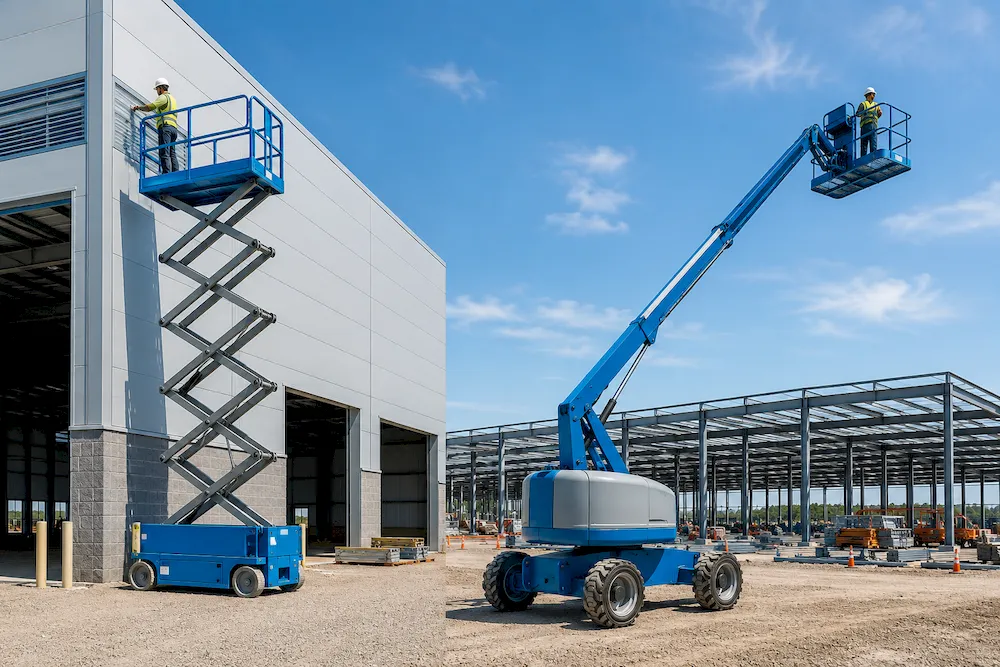
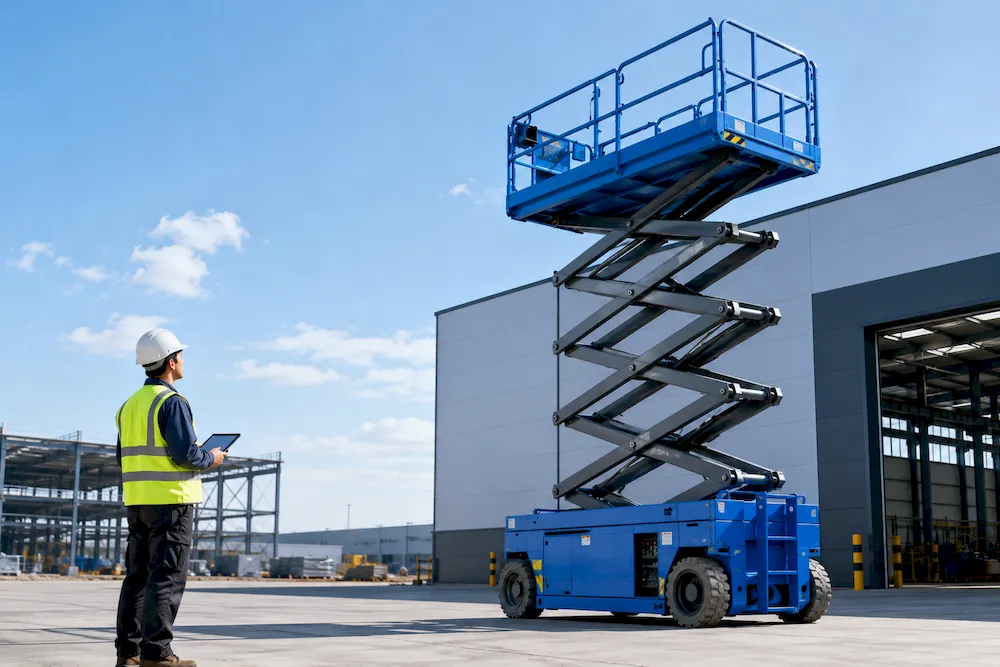
A scissor lift is a type of aerial work platform that moves vertically. It uses a crisscross lifting structure, also called a scissor mechanism, to raise and lower the working platform. Workers can stand on the platform with tools or materials to complete high-altitude tasks.
Compared with ladders or traditional scaffolding, a scissor lift offers a larger working area, better stability, and higher efficiency. It is widely used for building maintenance, ceiling installation, electrical work, warehouse picking, equipment repair, painting, cleaning, and construction projects.
Understand Your Required Working Height
The first factor to check is the working height. Many buyers only look at platform height, but platform height and working height are different. Platform height means the height from the ground to the platform floor. Working height usually means the platform height plus the average reach of a worker.
Measure the Highest Point of Your Work
Before choosing a scissor lift, measure the highest area your workers need to reach. This may be a warehouse rack, ceiling, roof edge, wall panel, lighting system, pipe, or steel structure. The lift should allow workers to reach this height comfortably without stretching too much.
It is usually better to choose a model with a little extra height instead of selecting a lift that only just reaches the required level. This gives workers more flexibility and helps improve safety during operation.
Do Not Choose Excessive Height Without Need
A higher scissor lift is usually larger, heavier, and more expensive. It may also need stronger ground support and more operating space. For indoor work or narrow sites, an oversized lift may create more problems than benefits. The best choice is not always the highest model, but the model that fits your real working conditions.
Check the Load Capacity
Load capacity is another important factor. It tells you how much weight the platform can safely carry. This includes workers, tools, materials, and any equipment placed on the platform.
For simple inspection or maintenance work, a smaller load capacity may be enough. For installation projects that require heavy tools, pipes, panels, lighting parts, or other materials, you should choose a model with higher capacity.
Calculate the Total Platform Load
Before selecting a model, estimate the total weight that will be placed on the platform. You should consider:
- The number of workers on the platform
- The weight of tools and toolboxes
- The weight of materials or components
- Any extra equipment used during work
Never overload a scissor lift. Overloading can affect stability and increase safety risks. Always choose a machine with enough capacity for your normal daily work.
Choose the Right Power Type
Scissor lifts can use different power systems. Common options include electric scissor lifts, hydraulic scissor lifts, battery-powered models, and diesel rough terrain scissor lifts. The right power type depends mainly on your working environment.
Electric Scissor Lift
Electric scissor lifts are commonly used indoors. They are quiet, clean, and easy to operate. Because they do not produce exhaust emissions during operation, they are suitable for warehouses, workshops, shopping centers, factories, and other enclosed spaces.
Electric models are usually compact and easy to move on flat ground. If your project is mainly indoors and the floor is smooth, an electric scissor lift is often a practical and cost-effective choice.
Diesel or Rough Terrain Scissor Lift
Diesel scissor lifts are more suitable for outdoor work and rough terrain. They usually have stronger power, larger tires, better climbing ability, and higher ground adaptability. They are commonly used on construction sites, outdoor installation projects, and uneven working areas.
If your site has gravel, mud, slopes, or rough ground, a rough terrain scissor lift may be more suitable than a standard indoor electric model.
Evaluate the Ground and Site Conditions
Your job site has a direct influence on the type of scissor lift you should choose. A machine that works well on a smooth warehouse floor may not be suitable for outdoor construction ground.
Indoor Site Conditions
For indoor applications, check the floor surface, door width, aisle width, turning space, ceiling height, and elevator capacity if the machine needs to move between floors. A compact electric scissor lift is usually better for narrow indoor spaces.
You should also check whether the floor can support the total machine weight. This is especially important for upper floors, mezzanines, or finished indoor areas.
Outdoor Site Conditions
For outdoor applications, check whether the ground is flat, solid, and strong enough to support the machine. If the ground is soft or uneven, you may need a rough terrain model. Wind conditions should also be considered, because outdoor high-altitude work requires better stability and careful operation.
Consider Platform Size and Extension Deck
Platform size affects how many workers can stand on the lift and how much room they have for tools and materials. A larger platform can improve working comfort and efficiency, especially for installation or maintenance work that requires movement.
Some scissor lifts are equipped with an extension deck. This allows workers to reach slightly farther without moving the whole machine. It is useful for ceiling work, wall installation, pipeline installation, and warehouse applications.
When Do You Need a Larger Platform?
A larger platform may be useful when:
- Two or more workers need to work together
- The job requires many tools or materials
- Workers need more space to move safely
- The working area is wide or difficult to access
However, a larger platform may also increase the machine size and weight. Make sure the lift can still move easily through your job site.
Check Machine Mobility
Mobility is important if the scissor lift needs to move frequently. In warehouses, factories, or workshops, the machine may need to pass through narrow aisles, doors, or production areas. In this case, a compact design and small turning radius are very useful.
For outdoor construction sites, mobility depends more on tire type, drive system, climbing ability, and ground clearance. Make sure the machine can move safely and smoothly in your real working environment.
Review Safety Features
Safety should always be a priority when choosing lifting equipment. A good scissor lift should have a stable structure, reliable control system, emergency functions, and basic safety protection.
Common Safety Features to Consider
- Emergency stop button
- Overload protection system
- Anti-slip platform surface
- Guardrails and safety gate
- Descent warning alarm
- Manual lowering system
- Stable braking system
In addition to equipment safety features, operators should receive proper training before using the machine. Regular inspection and maintenance are also necessary to keep the scissor lift in good working condition.
Consider Maintenance and Spare Parts
When buying a scissor lift, do not only compare the purchase price. You should also consider maintenance requirements, spare parts availability, technical support, and supplier experience.
A reliable supplier can help you choose the right model, provide operation guidance, and support future maintenance. For international buyers, export experience is also important. A professional supplier should understand packaging, shipping, documents, and basic technical communication.
Compare Price with Long-Term Value
The cheapest scissor lift is not always the best choice. A low-priced model may have limited capacity, shorter service life, fewer safety features, or weaker after-sales support. A suitable machine should match your working conditions and provide stable performance over time.
When comparing different models, you can review these points:
- Working height
- Load capacity
- Power type
- Platform size
- Machine weight and size
- Site suitability
- Safety features
- Maintenance cost
- Supplier support
A well-matched scissor lift can help reduce downtime, improve work efficiency, and support safer operation for your team.
Conclusion
Choosing the right scissor lift depends on your project requirements, working height, load capacity, power type, ground conditions, platform size, mobility needs, and safety requirements. Before making a purchase, take time to understand your real job site and daily operation needs.
If you are not sure which model is suitable, you can share your working height, load capacity, site conditions, and application details with a professional supplier. With the right support, you can select a scissor lift that helps your team work higher, safer, and more efficiently.